Retold in our own words from the end of the Gest, Sidgwick’s notes, and Howard Pyle’s 1883 book; places from Historic England · Published 30 October 2026
In the Gest
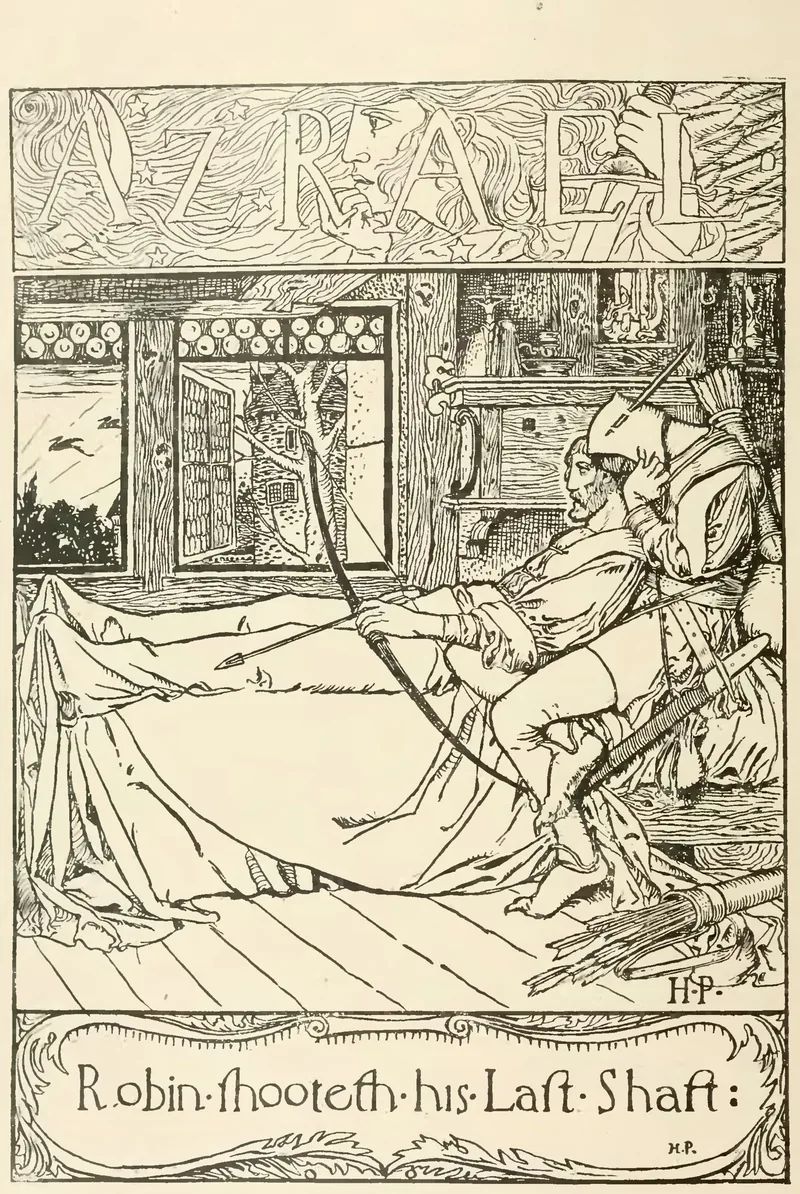
Literature The last verses of the Gest say Robin was betrayed by ‘a wycked woman, the pryoresse of Kyrkësly’, his own relative, together with her friend Sir Roger of Doncaster. Frank Sidgwick (ed.), Ballads of Robin Hood and other Outlaws (1912), Project Gutenberg ↗
Literature The Percy Folio ballad of Robin’s death, though damaged, tells the same main story as the end of the Gest. Frank Sidgwick (ed.), Ballads of Robin Hood and other Outlaws (1912), Project Gutenberg ↗
Literature Robin Hood and Guy of Gisborne and the Percy Folio version of Robin’s death survive only in the Percy Folio manuscript of about 1650. Pages of it were torn out and ‘used by maids to light the fire’ before Bishop Percy found it. Frank Sidgwick (ed.), Ballads of Robin Hood and other Outlaws (1912), Project Gutenberg ↗
In Pyle’s book
Literature In Pyle’s version Robin, unwell, goes to his cousin, the prioress of Kirklees, to have blood let, as people did then. She opens the wrong vein on purpose and locks the door. Howard Pyle, The Merry Adventures of Robin Hood (1883), Project Gutenberg ↗
Literature He blows his horn three times, faintly. Little John hears it and breaks down the doors to reach him. Howard Pyle, The Merry Adventures of Robin Hood (1883), Project Gutenberg ↗
Literature Robin asks Little John to mark where his last arrow lands, and to dig his grave there, ‘and see that my resting place be kept green’. Then he shoots from the window. Howard Pyle, The Merry Adventures of Robin Hood (1883), Project Gutenberg ↗
Where the arrow story comes from
Literature The arrow-and-grave ending is not in the Gest. It comes from later versions of the death ballad. Frank Sidgwick (ed.), Ballads of Robin Hood and other Outlaws (1912), Project Gutenberg ↗
Literature The story that Robin’s last arrow marks his grave comes from a later ‘garland’ version of his death, in which he bids Little John dig a grave where the arrow falls. Frank Sidgwick (ed.), Ballads of Robin Hood and other Outlaws (1912), Project Gutenberg ↗
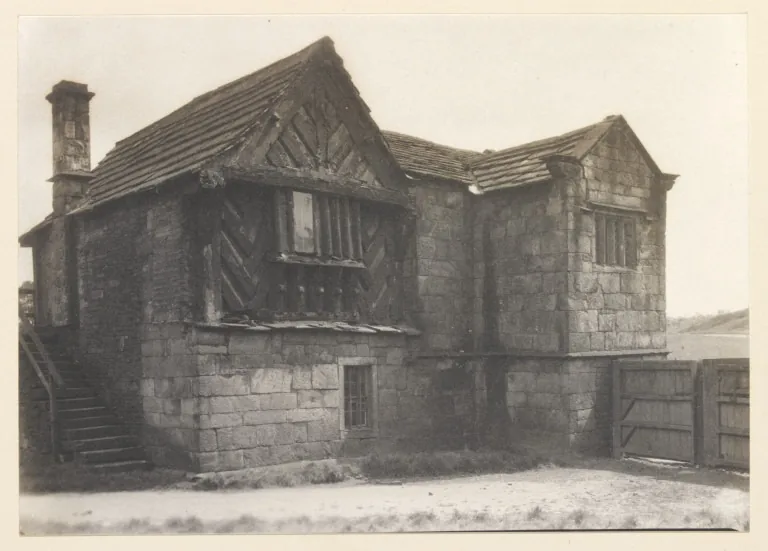
Tradition Historic England records the tradition that Robin shot an arrow from his deathbed in the gatehouse of Kirklees Priory to choose where he would be buried. Historic England: Kirklees Priory and Kirklees Park, list entry 1413828 ↗
Kirklees today
History Kirklees Priory, near Brighouse in West Yorkshire, was a small nunnery founded in the mid 1100s. It was surrendered to the Crown in 1539, when eight nuns lived there. Historic England: Kirklees Priory and Kirklees Park, list entry 1413828 ↗
History Sidgwick places Kirklees Priory on the north bank of the River Calder, a few miles north of Huddersfield. Frank Sidgwick (ed.), Ballads of Robin Hood and other Outlaws (1912), Project Gutenberg ↗
History The earliest known picture of the park is a sketch dated 1669 titled ‘The Prospect of Kirklees Abbey where Robin Hood Died’. Historic England: Kirklees Priory and Kirklees Park, list entry 1413828 ↗
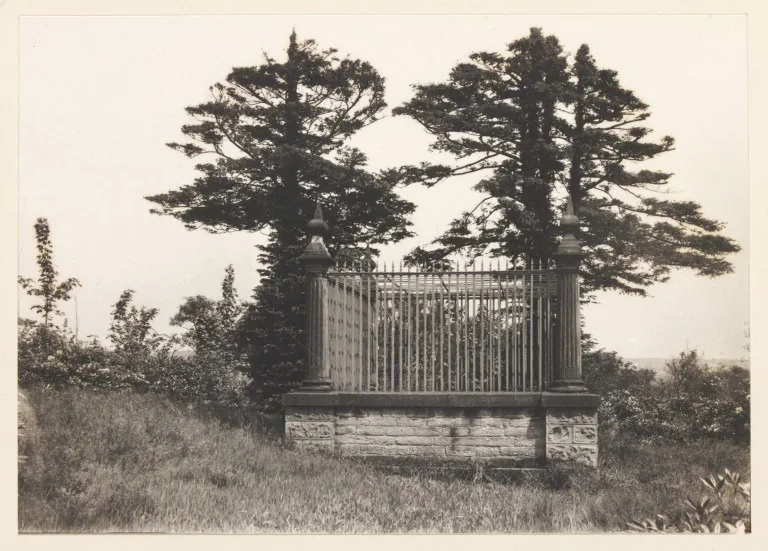
History Robin Hood’s Grave at Kirklees is a listed monument of the 1700s. Its inscription, in what Historic England calls ‘Chaucerian language’, ends ‘Obiit 24 Kal Dekembris 1247’. Historic England: Robin Hood’s Grave, Kirklees Park, list entry 1184066 ↗
History Historic England notes that the grave enclosure, built in the early 1700s, was then known as the ‘Standing Hearse’. Historic England: Kirklees Priory and Kirklees Park, list entry 1413828 ↗
History An epitaph for a grave said to be Robin’s at Kirklees was recorded by Thomas Gale in 1702. Dr Mike Ibeji, ‘Robin Hood and his Historical Context’ (2011, archived web article) ↗
History Ibeji quotes the full date as ‘25 Kalends Decembris 1247’ and points out it is impossible, since there was no ‘25 Kalends’ in the Roman calendar. (The stone itself, as Historic England reads it, says 24.) Dr Mike Ibeji, ‘Robin Hood and his Historical Context’ (2011, archived web article) ↗ Historic England: Robin Hood’s Grave, Kirklees Park, list entry 1184066 ↗
Follow the thread
Frank Sidgwick (ed.), Ballads of Robin Hood and other Outlaws (1912), Project Gutenberg ↗
Howard Pyle, The Merry Adventures of Robin Hood (1883), Project Gutenberg ↗
Historic England: Kirklees Priory and Kirklees Park, list entry 1413828 ↗
Historic England: Robin Hood’s Grave, Kirklees Park, list entry 1184066 ↗
Dr Mike Ibeji, ‘Robin Hood and his Historical Context’ (2011, archived web article) ↗
Retellings are in our own words. Every sentence above carries a label (History, Literature or Tradition) and a link to the source it was checked against. A ballad is not a historical record.
Source method & more reading ↗