Retold in our own words from the First, Second and Fourth Fyttes of A Gest of Robyn Hode (Sidgwick’s 1912 edition) · Published 30 October 2026
A dinner guest
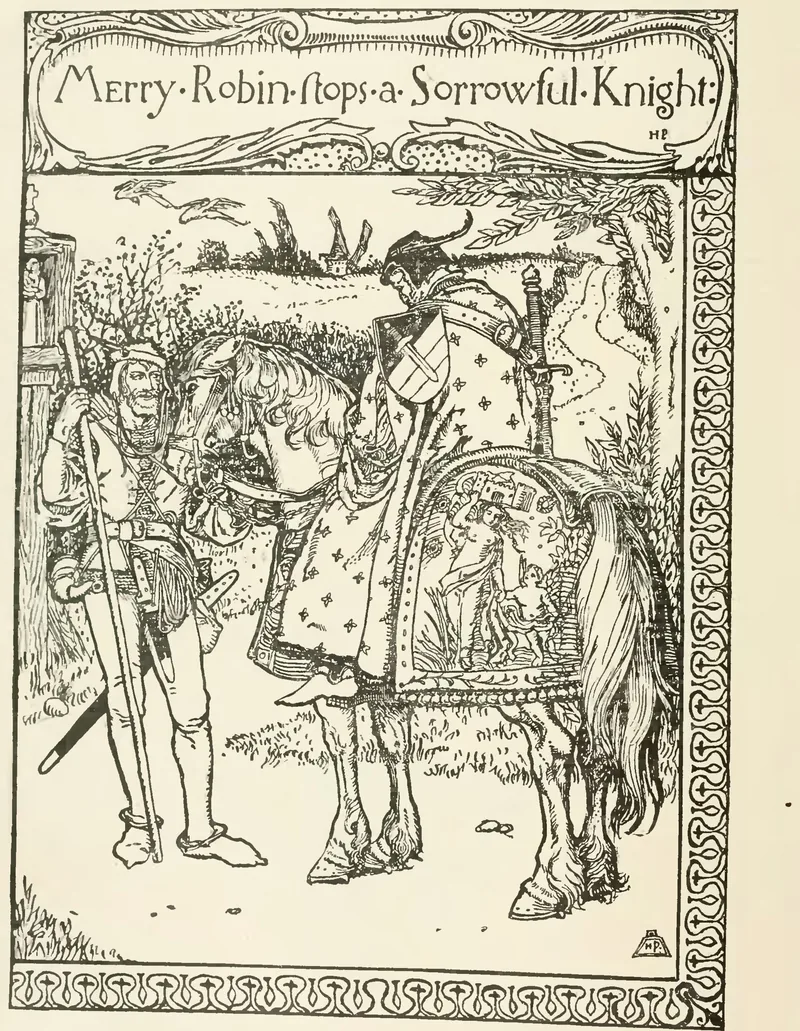
Literature The Gest opens with Robin refusing to eat until he has a guest at his table. He sends Little John to bring in any earl, baron, abbot or knight who passes. Frank Sidgwick (ed.), Ballads of Robin Hood and other Outlaws (1912), Project Gutenberg ↗
Literature Sidgwick suggests this is a joke on King Arthur’s custom of refusing dinner until he has had an adventure. Frank Sidgwick (ed.), Ballads of Robin Hood and other Outlaws (1912), Project Gutenberg ↗
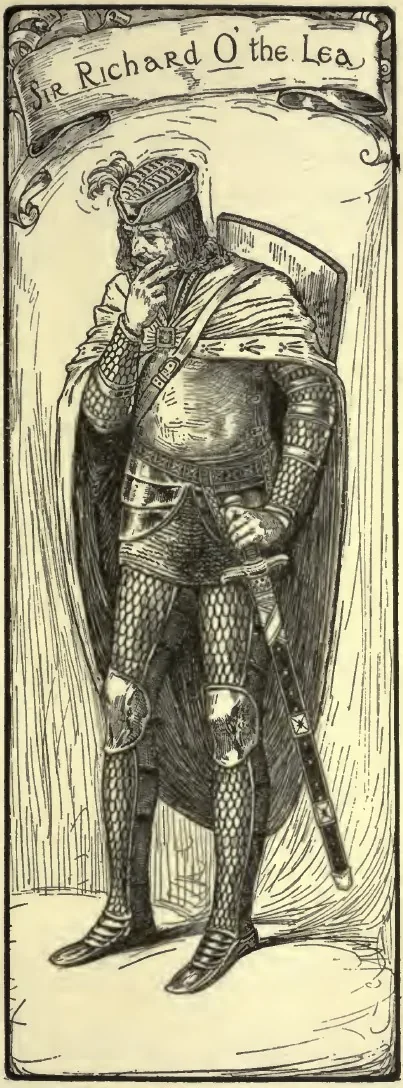
Literature They bring back a sad knight. When asked to pay for his meal, he admits he has sold all he owns to save his son. Frank Sidgwick (ed.), Ballads of Robin Hood and other Outlaws (1912), Project Gutenberg ↗
Literature Robin lends him four hundred pounds, with Our Lady (the Virgin Mary) as his guarantee. He also gives him clothes, a horse, boots and spurs, and Little John as his squire. Frank Sidgwick (ed.), Ballads of Robin Hood and other Outlaws (1912), Project Gutenberg ↗
At St Mary’s Abbey, York
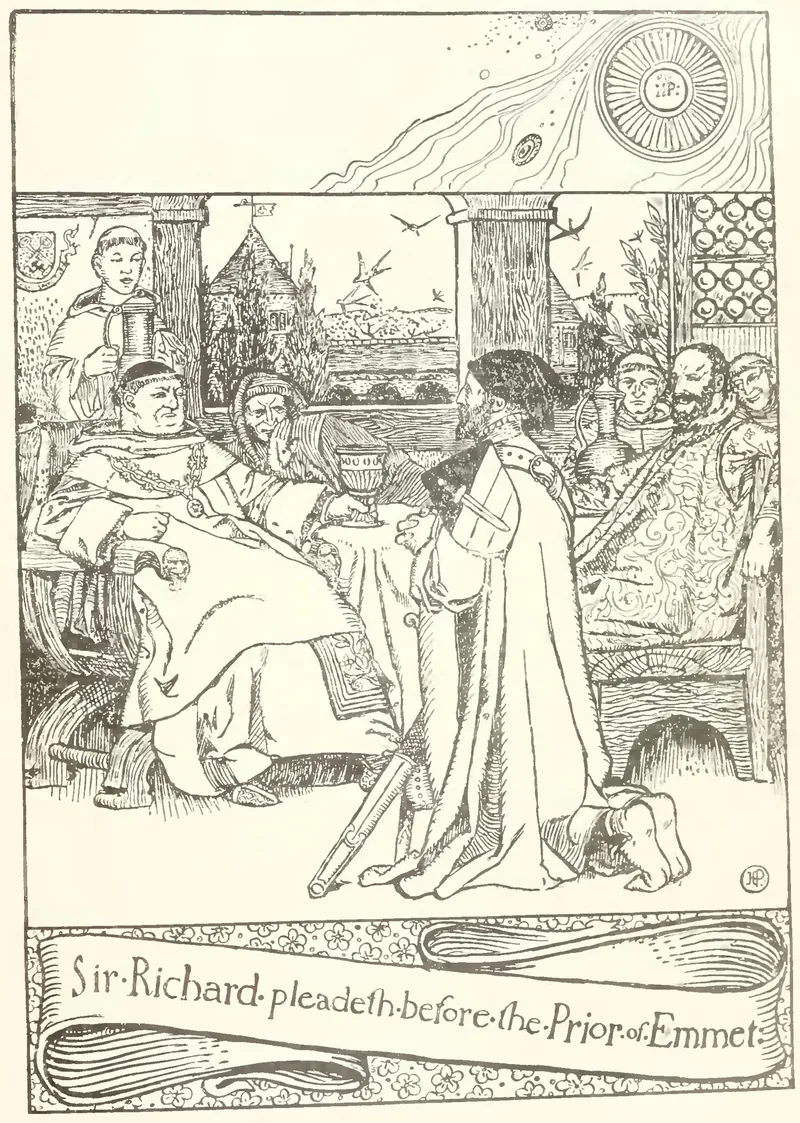
Literature The knight owes money to the abbot of St Mary’s Abbey in York, who expects to take his lands. At first the knight pretends he cannot pay and asks for more time, which the abbot and the chief justice refuse. Frank Sidgwick (ed.), Ballads of Robin Hood and other Outlaws (1912), Project Gutenberg ↗
Literature Then he puts down the full four hundred pounds, saying that if the abbot had been more courteous he would have paid him something extra. Frank Sidgwick (ed.), Ballads of Robin Hood and other Outlaws (1912), Project Gutenberg ↗
History In the Gest, the knight’s lands are pledged to the abbot of ‘St. Mary Abbey’ in York. Frank Sidgwick (ed.), Ballads of Robin Hood and other Outlaws (1912), Project Gutenberg ↗
Our Lady repays the loan
Literature Later, Robin’s men stop a monk of the very same abbey and find he is carrying eight hundred pounds, which Robin takes. Frank Sidgwick (ed.), Ballads of Robin Hood and other Outlaws (1912), Project Gutenberg ↗
Literature When the knight arrives to repay his loan, Robin will not take it: Our Lady, he says, has paid him back already. Frank Sidgwick (ed.), Ballads of Robin Hood and other Outlaws (1912), Project Gutenberg ↗
About the Gest
Literature Ibeji dates the main surviving tales: Robin Hood and the Monk (about 1450), and the Gest of Robyn Hode (written down about 1492 to 1510, but probably composed about 1400). Dr Mike Ibeji, ‘Robin Hood and his Historical Context’ (2011, archived web article) ↗
Literature The Gest was printed early: one surviving fragment is now credited to Jan van Doesborch, a printer from Antwerp, and the main text used by editors is Wynkyn de Worde’s. Frank Sidgwick (ed.), Ballads of Robin Hood and other Outlaws (1912), Project Gutenberg ↗
Literature The Gest ends: ‘For he was a good outlawe, And dyde pore men moch gode.’ Frank Sidgwick (ed.), Ballads of Robin Hood and other Outlaws (1912), Project Gutenberg ↗
Follow the thread
Frank Sidgwick (ed.), Ballads of Robin Hood and other Outlaws (1912), Project Gutenberg ↗
Dr Mike Ibeji, ‘Robin Hood and his Historical Context’ (2011, archived web article) ↗
Retellings are in our own words. Every sentence above carries a label (History, Literature or Tradition) and a link to the source it was checked against. A ballad is not a historical record.
Source method & more reading ↗