Retold in our own words from Child’s headnote to Robin Hood and the Curtal Friar (Child 123) and Howard Pyle’s 1883 book · Published 30 October 2026
The story
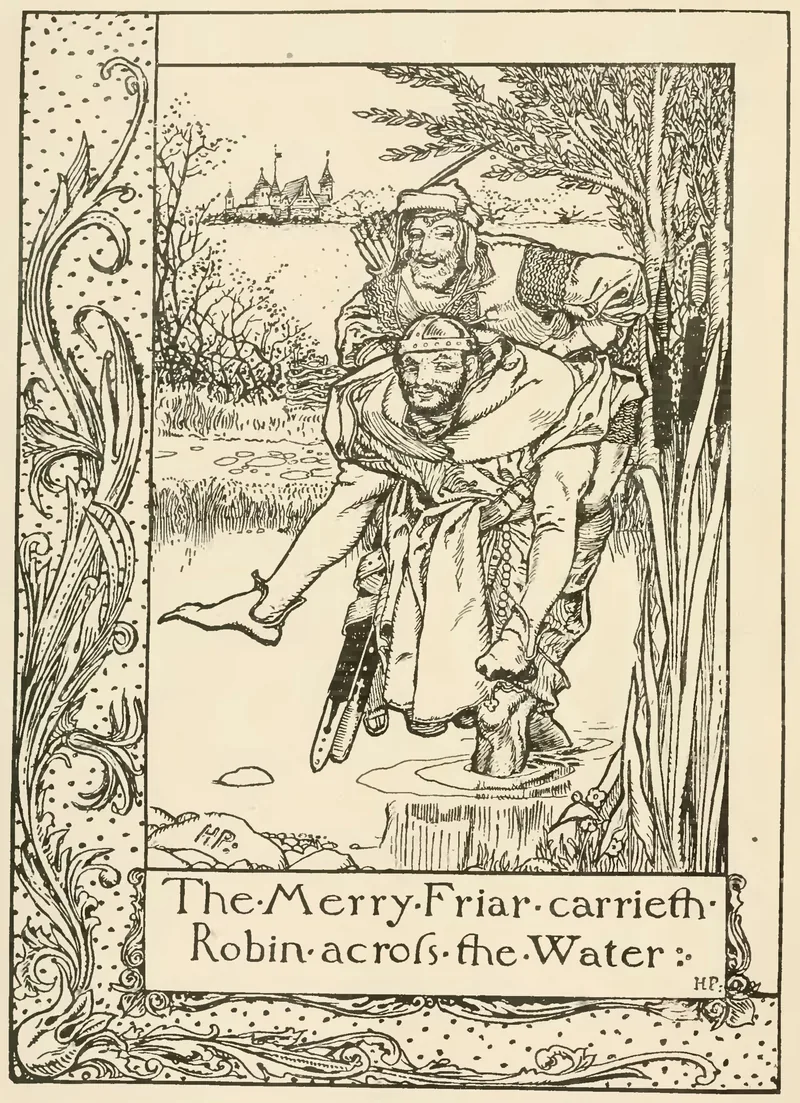
Literature In the ballad of the Curtal Friar, Will Scadlock laughs that there is a friar at Fountains Abbey who could beat Little John and Robin too. Robin swears not to eat or drink until he has seen him. Francis James Child (ed.), The English and Scottish Popular Ballads, vol. 3 (1888), Project Gutenberg ↗
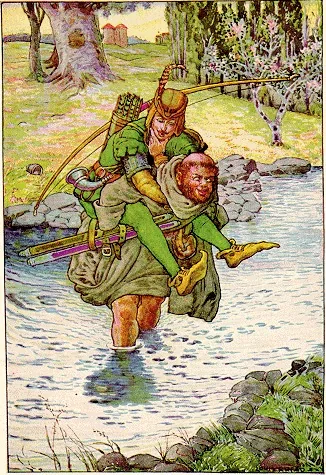
Literature Robin finds the friar walking by the water and asks to be carried across. The friar carries him without a word, then draws his sword and makes Robin carry him back. Francis James Child (ed.), The English and Scottish Popular Ballads, vol. 3 (1888), Project Gutenberg ↗
Literature Robin carries him, then demands to be carried over once more. In the middle of the stream the friar throws him in. Francis James Child (ed.), The English and Scottish Popular Ballads, vol. 3 (1888), Project Gutenberg ↗
Literature Pyle makes a comic scene of it. The friar compares himself to Saint Christopher, and when he finally tips Robin into the ford he says, ‘let that cool thy hot spirit, if it may.’ Howard Pyle, The Merry Adventures of Robin Hood (1883), Project Gutenberg ↗
Literature In the ballad, the two fight until Robin asks to blow his horn and fifty bowmen come running. The friar then whistles, and fifty great dogs come running too. Francis James Child (ed.), The English and Scottish Popular Ballads, vol. 3 (1888), Project Gutenberg ↗
Literature In the end Robin offers the friar clothes and pay to leave Fountains Abbey for the greenwood. Pyle’s friar says that some call him ‘simple Friar Tuck’. Francis James Child (ed.), The English and Scottish Popular Ballads, vol. 3 (1888), Project Gutenberg ↗ Howard Pyle, The Merry Adventures of Robin Hood (1883), Project Gutenberg ↗
Is he Friar Tuck?
Literature Britannica says the oldest texts do not call the fighting friar ‘Tuck’; he is the friar of Fountains Abbey. Britannica (Scholars): Robin Hood ↗
Literature But the Percy Folio copy of the friar ballad (about 1650) is headed ‘Robine Hood and Ffryer Tucke’. Francis James Child (ed.), The English and Scottish Popular Ballads, vol. 3 (1888), Project Gutenberg ↗
Literature Sidgwick points out there is no friar in Robin’s band in any of the older ballads, and no Maid Marian. Both appear in a play printed about 1560. Frank Sidgwick (ed.), Ballads of Robin Hood and other Outlaws (1912), Project Gutenberg ↗
Two real ‘Frere Tuks’
History A royal commission dated 9 February 1417 ordered the arrest of ‘one assuming the name of Frere Tuk and other evildoers of his retinue’ in Surrey and Sussex. Reading the Rolls: Calendar of Patent Rolls entry, 9 February 1417 ↗
History A roll entry of 12 November 1429 names ‘Robert Stafford of Lyndefeld, chaplain, alias Frere Tuk’, summoned for failing to appear in court. (The online transcription of this entry is marked as machine-read and unverified.) Reading the Rolls: Calendar of Patent Rolls entry, 12 November 1429 (machine-read text) ↗
History Ibeji thinks it likely that the original Friar Tuck was this Robert Stafford, active in Sussex between 1417 and 1429. Dr Mike Ibeji, ‘Robin Hood and his Historical Context’ (2011, archived web article) ↗
These records show that men really used the name ‘Frere Tuk’ in the 1400s. They do not show that the friar of the ballads was a real person.
The abbey
History Fountains Abbey, near Ripon in North Yorkshire, was a Cistercian monastery founded in the 1100s. Francis James Child (ed.), The English and Scottish Popular Ballads, vol. 3 (1888), Project Gutenberg ↗
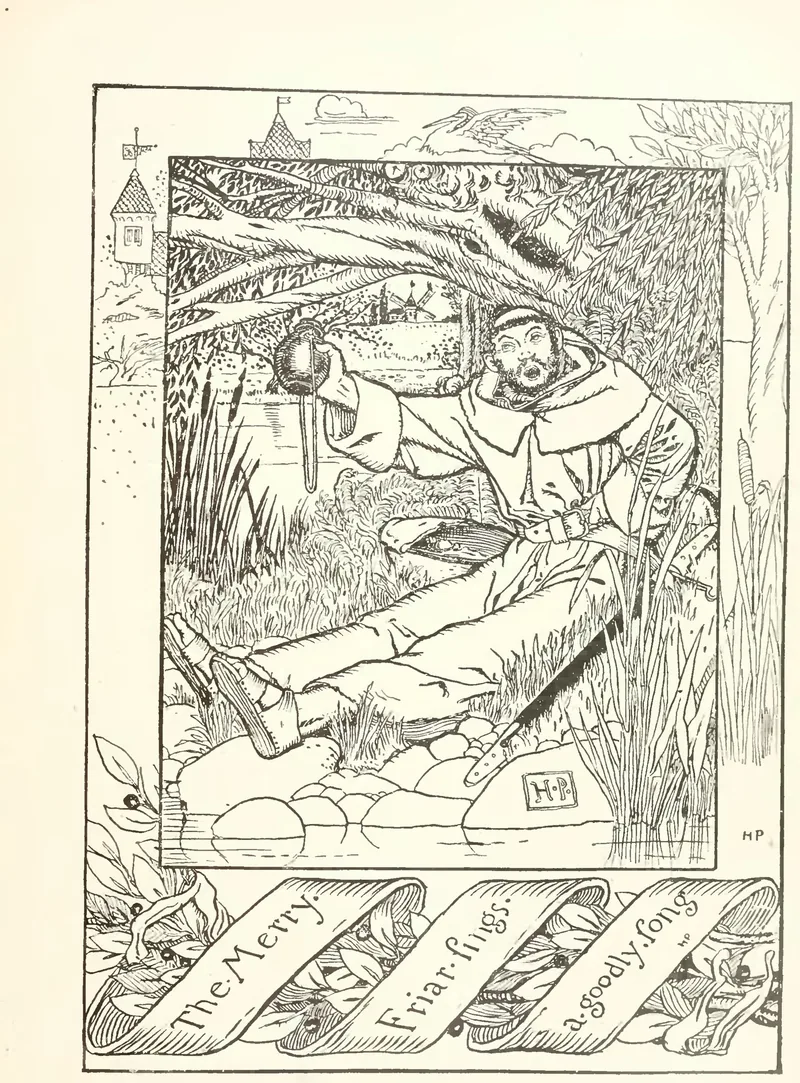
Follow the thread
Howard Pyle, The Merry Adventures of Robin Hood (1883), Project Gutenberg ↗
Britannica (Scholars): Robin Hood ↗
Frank Sidgwick (ed.), Ballads of Robin Hood and other Outlaws (1912), Project Gutenberg ↗
Reading the Rolls: Calendar of Patent Rolls entry, 9 February 1417 ↗
Reading the Rolls: Calendar of Patent Rolls entry, 12 November 1429 (machine-read text) ↗
Dr Mike Ibeji, ‘Robin Hood and his Historical Context’ (2011, archived web article) ↗
Retellings are in our own words. Every sentence above carries a label (History, Literature or Tradition) and a link to the source it was checked against. A ballad is not a historical record.
Source method & more reading ↗